Bathroom Renovation in Richmond
Small room, most trades. Waterproofing is the part you never see and always pay for twice if it is wrong.
- Google rating
- 5.0
- Verified reviews
- 14
- Service in
- English · 中文
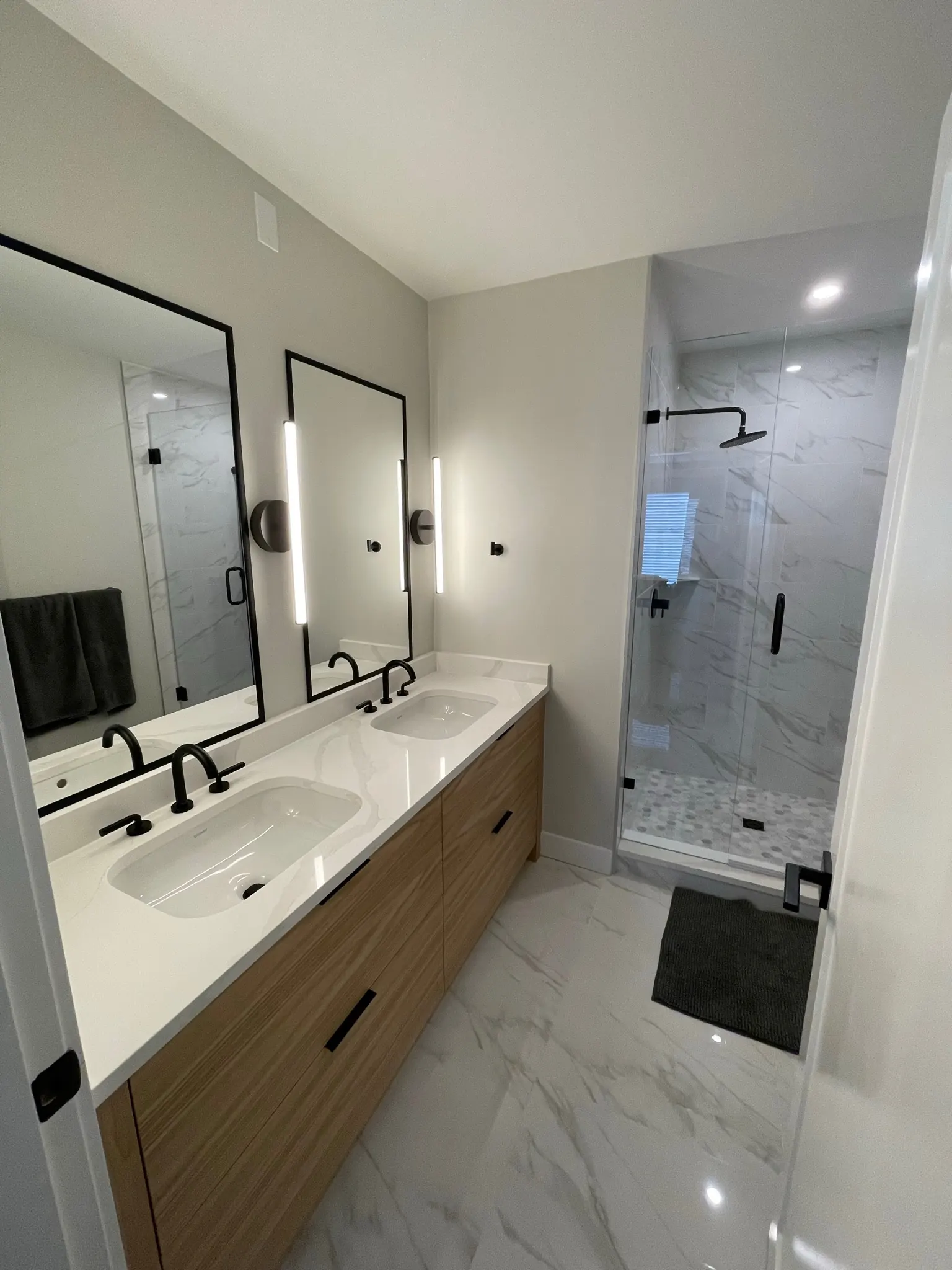
Bathroom renovations, from the waterproofing up.
The tile work in both bathrooms is dead straight, and the cabinet doors still line up two years on. Ethan went through all of it with us in Mandarin, including the parts we would not have known to ask about.
Bathrooms they have finished
Aaron's own photographs, job by job.
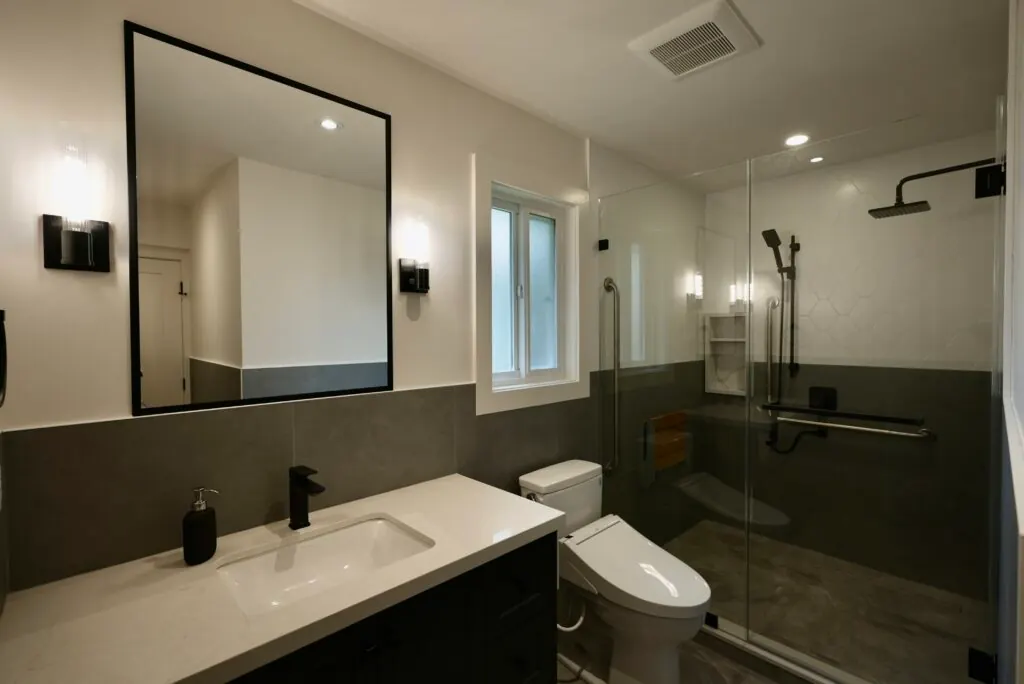
Curbless, with grab bars and a fold-down seat — an accessible bathroom that does not look like one.Quebec · Renovation 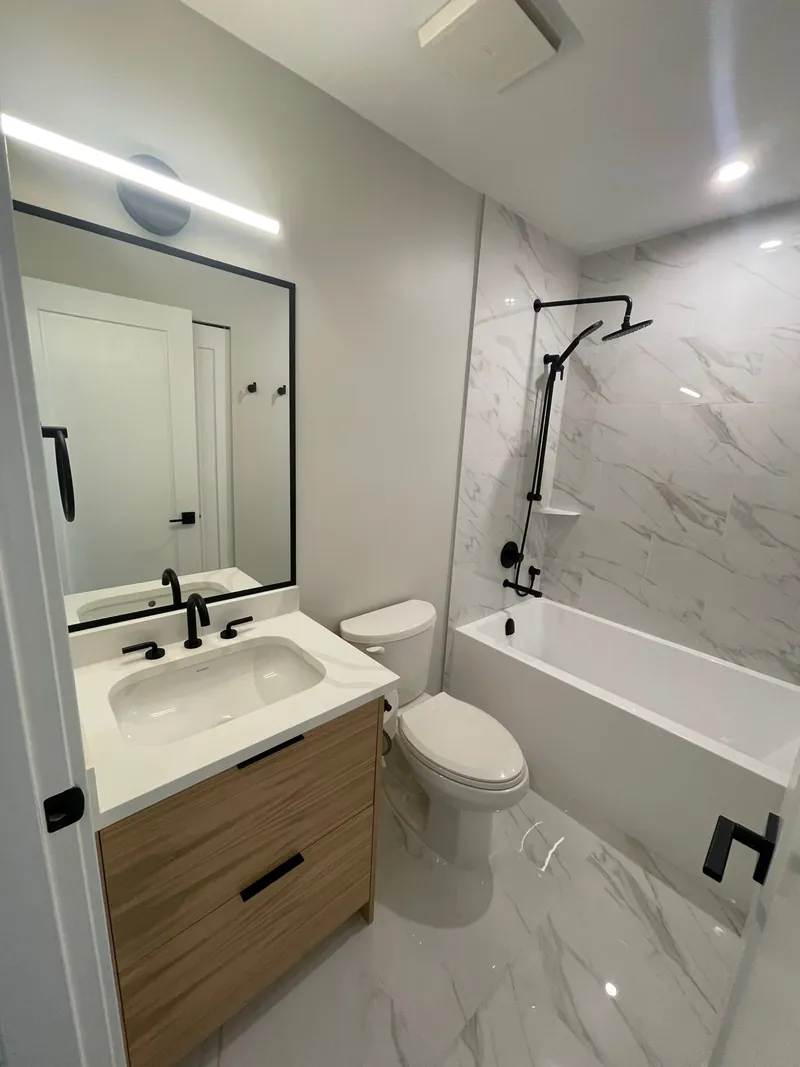
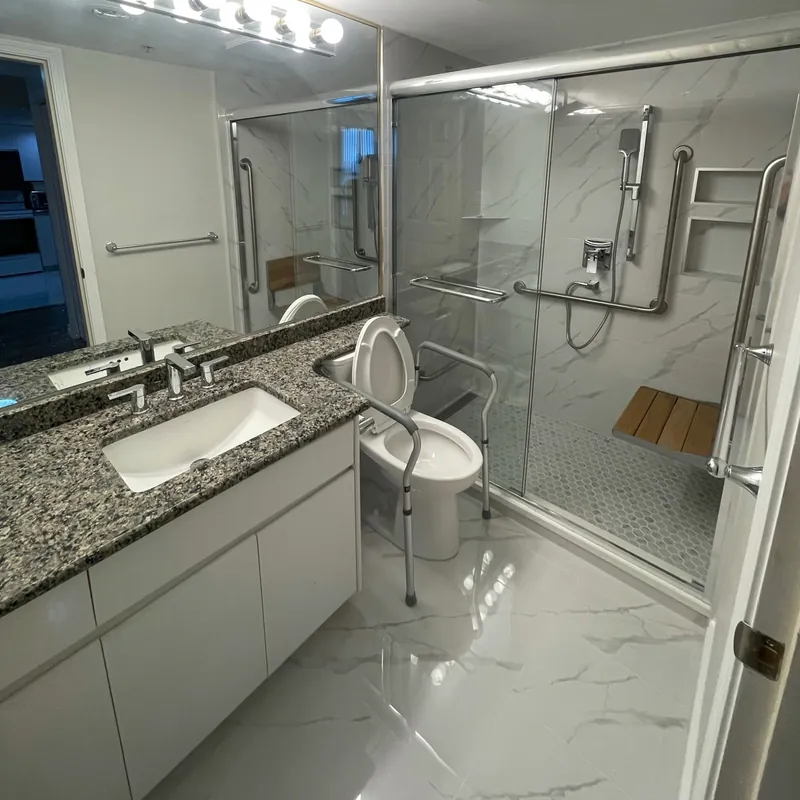
The same main bath as before the gut, rebuilt on waterproofed board.Cumberland · Renovation 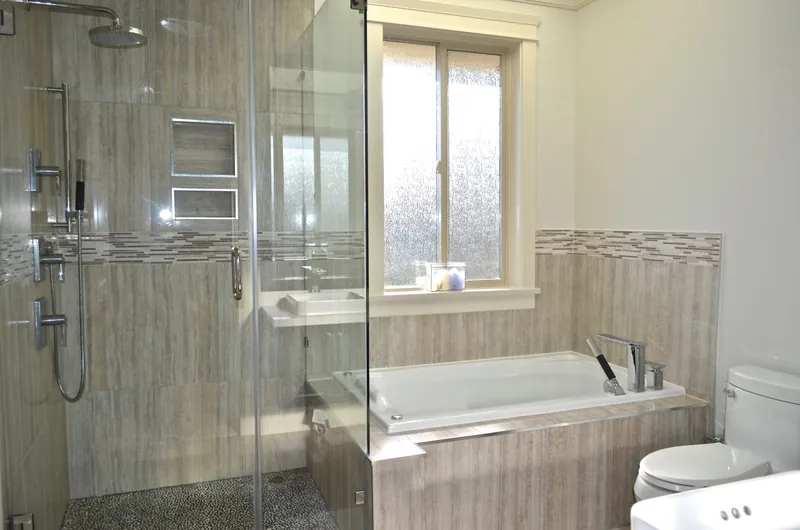
Large-format porcelain, with the screen instead of a door.Bonavista · New build 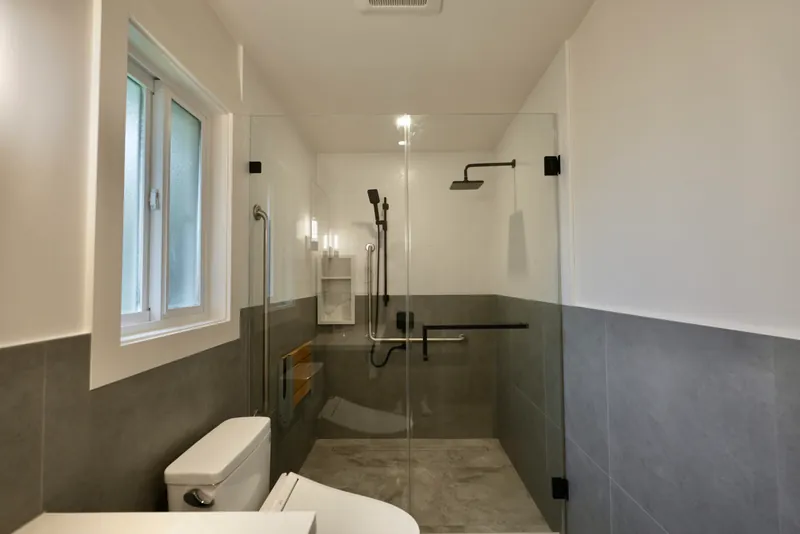
A low threshold, planned for how long the owners intend to stay.Pitt Meadows · Renovation 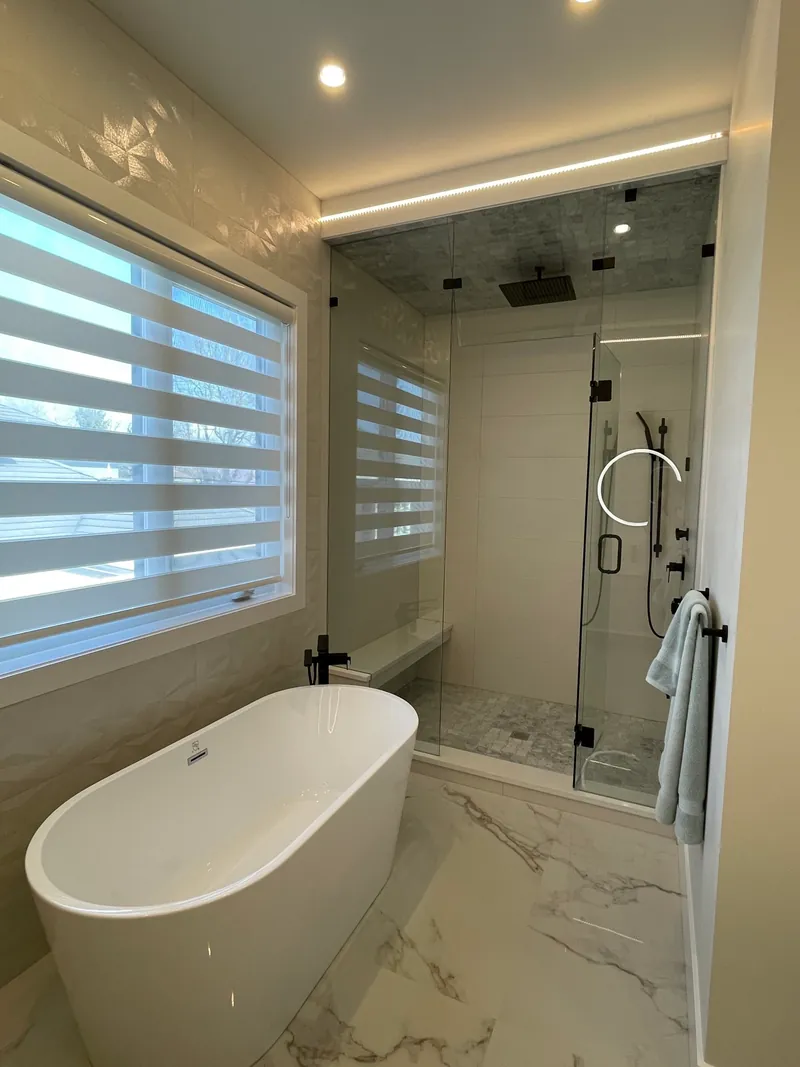
Freestanding tub under the window, frameless glass beside it.New build 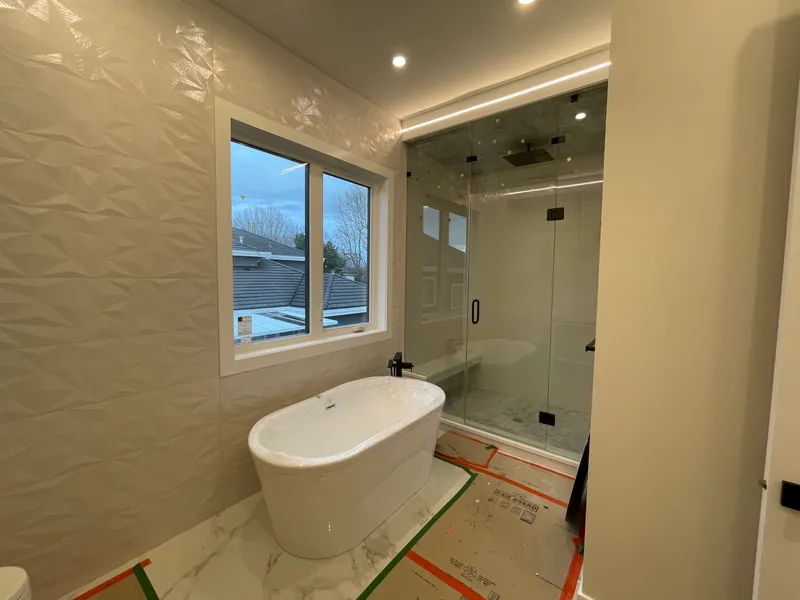
The textured wall goes up before the tub is set — and the floor protection is still down in this frame.New build 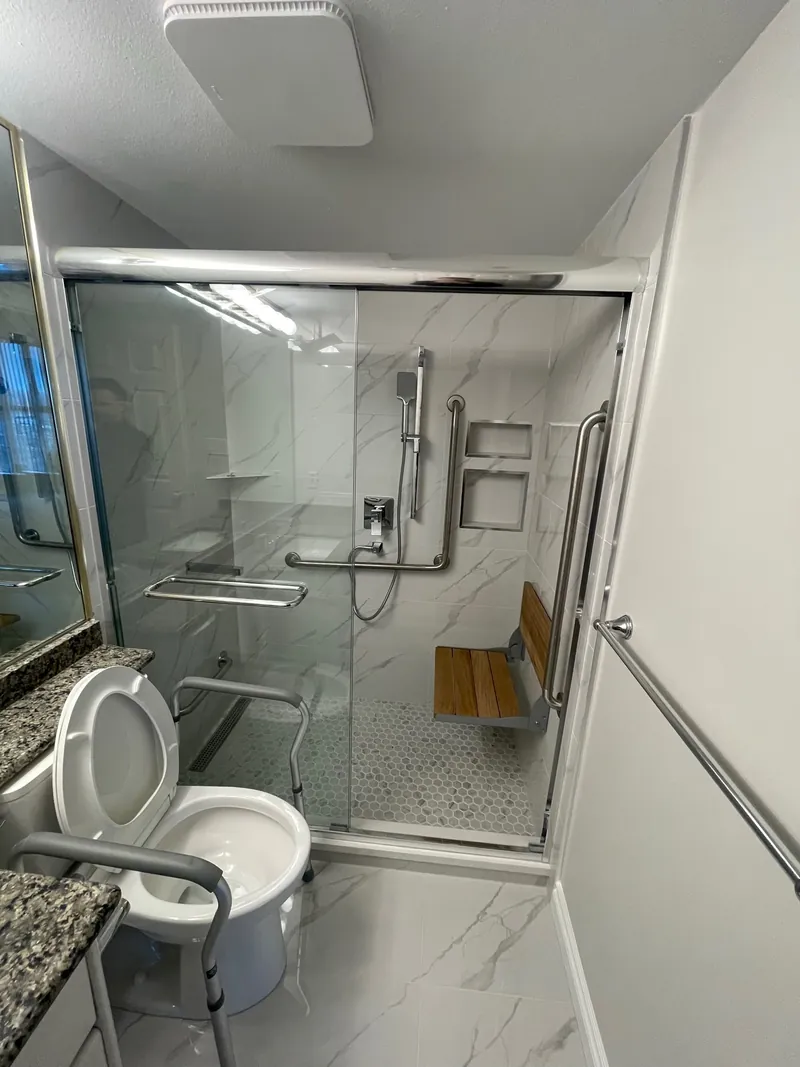
Everything within reach from the seat. That is the brief, and it is measured.Quebec · Renovation
What to check, and what to ask
General guidance for homeowners, not specific to your house — worth knowing before you sign with anyone, including us.
-
Ask what happens if the wall behind the tile is wet
Bathrooms are the room where what is found behind the surface most often changes the job. It is fair to ask, before work starts, how a rotted subfloor or a leaking valve gets priced and approved rather than discovered as a surprise.
-
Waterproofing is under the tile, which is where you will never see it
The membrane behind and under the tile is the part that decides whether this bathroom is still sound in ten years, and it is the part a low quote quietly leaves thin. Ask what system is being used and ask to see it before it gets covered.
-
Ventilation is part of the renovation, not an accessory
A fan that is undersized, or that vents into the attic instead of outside, will make mould in a bathroom that is otherwise finished perfectly. Ask where the fan discharges.
-
Count your bathrooms before you count your tiles
In a one-bathroom home the renovation is a household logistics problem as much as a construction one. Knowing roughly which stretch is unusable is worth more at the planning stage than any finish decision.
Before you take any quote
-
1. Get the scope in writing first, down to who supplies what
Tub or walk-in shower. Tile to the ceiling or to the shower head. Whether the vanity, the fixtures and the glass are supplied by you or by the contractor. Until that list exists, comparing prices is comparing nothing.
-
2. Ask what the estimate says about what is behind the wall
Bathrooms hide their condition until demolition. A one-page number does not tell you how rot, an old drain or a leaking valve will be handled. A real estimate says what is included, what is excluded, and how a discovery gets priced and approved before it is repaired.
-
3. Check the tile and fixture allowances against what you actually want
Tile prices vary enormously and the allowance in a quote is a guess about your taste. Walk a tile shop first, then read the allowance. A quote that looks cheaper often just assumed you would choose differently than you will.
-
4. Agree the payment schedule and the change-order rule in the same conversation
Money should follow completed, inspectable stages, and no extra work should begin without a written, priced change order. Both rules are easy to agree to before anything is demolished and nearly impossible to introduce afterwards.
-
5. Ask which parts need a permit and who is pulling it
Moving plumbing or altering electrical generally requires a permit and an inspection, and the permit is what protects you — it produces a record that the work was inspected, which matters when you sell. A contractor who suggests skipping it is transferring the risk to you.
Before you call
- How do I know the waterproofing was done properly?
- You ask to see it before the tile goes on, and you photograph it. A bathroom is rebuilt on backer board with the seams and corners waterproofed and the shower floor floated to the drain — all of which disappears permanently under tile within a day or two. Anyone doing it correctly will be happy to show you; that window is the only chance you get.
- Can we live here with one bathroom out?
- Usually yes, and it is the normal case rather than the exception. The room is sealed behind containment with the floor protected on the route in and out, so the dust stays in the room being worked on. If the house has only one bathroom, say so at the quote — that changes how the work is sequenced.
- Can it be made accessible without looking like a hospital?
- Yes. A curbless shower, a fold-down seat and grab bars set into blocking read as ordinary fittings when they are chosen and placed properly — see the Quebec Drive bathroom in the gallery above. The part that has to happen early is the blocking behind the wall: retrofitting a grab bar into finished tile is a much worse day than putting the wood in first.
- What decides the price of a bathroom?
- Three things, in order: whether the plumbing moves, how much tile there is and how it is laid, and what the fittings cost. A small room with a lot of trades in it is why bathrooms cost what they do per square foot. The allowances in the quote are real numbers, so you can move money between tile and lighting without the whole thing drifting.